
Teaching Phonics to Preschoolers: Is Your Child Ready?
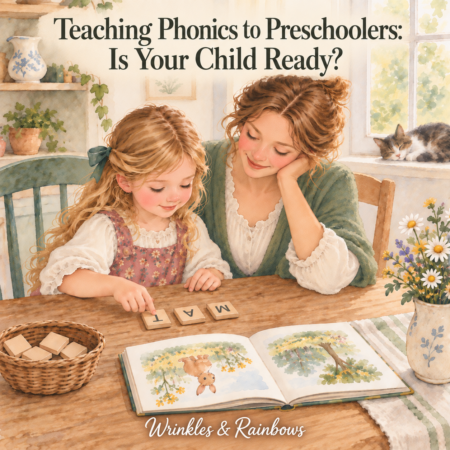
Teaching phonics to preschoolers: Is your child ready? That isn’t a one-size-fits-all question. (Sorry.) Some preschoolers are eager to begin sounding out words, while others need more time to play with letters and become familiar with their sounds—and that’s perfectly okay. Before we talk about readiness, it helps to distinguish between learning the alphabet and learning phonics. Learning the alphabet begins with recognizing and naming letters and becoming familiar with the sounds they commonly represent. Phonics takes that knowledge one step further: it teaches children how the sounds of spoken language connect to written letters, and how those letters and sounds work together to form words. In other words, knowing the alphabet lays the foundation. Phonics helps a child begin turning those familiar letters into words they can actually read. Let’s Start At the Very Beginning (Humming the “Do-Re-Mi” song…) Before children can use letters to build and read words, they need a growing familiarity with the alphabet. This usually begins very naturally: singing the alphabet song, playing with magnetic letters, matching letters to pictures, noticing letters in books and signs, and learning the sounds they commonly make. Some children become fascinated with letters very young. Others aren’t interested until later. Both are perfectly normal. Story time: When my third child was two, he began recognizing and writing letters. By the time he was four, he was reading some simple three-letter CVC words. With two older sisters to watch, he seemed to pick it all up very quickly. But just as quickly as he started, he stopped. He was no longer interested. So we switched from Hare Mode to Tortoise Mode. Instead of pushing forward simply because he had shown that he could, we slowed down and waited. A couple of years later, he was ready to begin making progress again. That experience taught me something important: being able to recognize letters or sound out a few words doesn’t always mean a child is ready for regular reading instruction. Knowing the alphabet is an important foundation, but readiness also involves interest, attention, memory, and the developmental ability to begin connecting sounds into words. So how can you tell when your child is truly ready? Ready, Set, Go! There isn’t one particular age—or one perfect readiness test—that tells you when to begin teaching phonics. Instead, look for a growing collection of readiness signs that your child is becoming ready to connect spoken sounds with written letters. You may notice: Your child doesn’t need to demonstrate every sign perfectly before you begin. These are simply clues that it may be time to test the waters with a few playful phonics activities. Follow their response. If they are curious and enjoying themselves, continue gently. If they become frustrated, resistant, or uninterested, take a break and try again later. There is no prize for beginning early—and no failure in waiting until your child is truly ready. Okay, My Preschooler Seems Ready to Read, So Now What? Yay! Now we get to the fun part. Teaching a child to read can be wonderfully rewarding. Watching that little light bulb come on when a child realizes that the marks on the page form a word is a beautiful thing. It can also be frustrating sometimes. There are so many programs, methods, opinions, and lists of things your child is supposedly meant to know. It’s understandable if teaching reading feels a bit daunting at first. The first thing I want you to remember is this: you do not have to find one perfect program or teach every skill at once. There are different ways to organize phonics instruction, but a good beginning will help your child connect letters with sounds, blend those sounds together, and gradually read simple words. Children learn those skills at different rates, and you are not on a deadline. Begin by noticing which stage your child is in: The second thing I encourage you to do is spend plenty of time reading aloud together—not only as a lesson, but simply for the joy of sharing good books. Reading aloud builds vocabulary, understanding, imagination, and a love of stories, while phonics instruction teaches children how to decode the words for themselves. Young children need both. As they begin learning letters and words, they’ll delight in recognizing them inside the favorite stories you have read together again and again. When you’re ready to begin, keep the lessons short, concrete, and playful. Here are three gentle ways to practice phonics with your preschooler. Three Gentle Methods For Teaching Phonics to Preschoolers 1. Use Letters Your Child Can Touch and Move A small collection of physical letters can be used from the earliest days of alphabet play through the beginning stages of reading. Magnetic letters, wooden letters, alphabet puzzles, letter tiles, and even handmade paper letters all work beautifully. While your child is learning the alphabet, use the letters to practice recognizing, naming, matching, and sorting them. Once your child knows the letters and their basic sounds, use those same pieces to begin building simple words. For example, you might place M-A-T in a row, point to each letter as you make its sound, and then slowly blend the sounds together: /m/ /ă/ /t/—mat. Your child can watch first, then begin joining you when they are ready. I began collecting inexpensive letter toys when my youngest, Millie, started recognizing letters. We used magnetic letters, wooden alphabet puzzles, and other hands-on pieces. One of our favorites was a set of wooden letter-and-flashcard puzzles. Each letter fit into its matching card only one way, making the activity both hands-on and self-correcting. Movable letters are especially helpful for young children because reading and writing do not have to develop at exactly the same pace. A child who isn’t ready to write words independently can still choose letters, arrange them in order, touch each sound, and experience the satisfaction of building a word. 2. Turn Practice Into a Matching Game Matching is a simple way to practice letters and sounds without making the activity feel like a lesson—or a quiz. Begin with the kind of matching your
On the Farm, Preschool Unit
Preschoolers love learning about farms! Doing a preschool farm study is a great way to introduce them to some new things outside of their small world. Unless you live on a farm, most four year olds haven’t seen cows and pigs and goats in real life. Also, most kids like animals and baby animals so it’s a win-win. =) “On the Farm” is the second study we are doing for our preschool year. We have several friends with small farms and Lil Miss Mouse adores baby goats, feeding animals, and gardening. This month we will be digging a little deeper and learning a little more. What is a farm? First order of business is defining a farm. The simplest definition is this: an area of land used for growing animals or crops. Farms can be small, run by one person or family, or very large businesses with lots of employees. Farms come in many shapes and sizes. In this unit we will look at some of them. Some Types of farms: Meat and dairy farms grow animals to eat their meat or their milk, such as cows, goats, chickens, pigs, ducks, and turkeys. Milk also is used to make cheese and yogurt. Crop farms grow fruits, vegetables or grains to harvest and eat, such as corn, wheat, carrots, beans, strawberries, or pumpkins. Grains like wheat and corn can eaten whole or ground into flour to make bread. Livestock farms raise livestock for their resources or labor. Alpaca and sheep wool can be sold to make yarn for making blankets and clothes. Horses and donkeys can be sold as work animals. Orchards and tree farms grow trees like apple trees or Christmas trees. Fruit trees like apple, orange, pear, and plum trees take a long time to grow and produce a lot of fruit. Bee farms are called apiaries. Some people have very large bee farms that produce very large amounts of honey and beeswax. A lot of small farms also have small bee farms called hives. Some farms grown one thing, like fish farms, flower farms, and peanut farms. A lot of farms have many different types of things they grow, and family farms often make and sell their own products. Types of farming equipment. All farms need some type of farm equipment and tools. Small farms use smaller tools but they still need something to dig up the ground or harvest it, something to haul supplies, and tools to take care of the animals. When we think of farm equipment, we usually think of the big ones. =) Some of the most common items are: But if you have a kid who really loves big trucks and tractors and all sorts of large machinery, then you can use this list of 20 pieces of farm equipment (with pictures and uses.) Farm animals Livestock farms, dairy farms, and meat farms will have LOTS of animals. They grow lots and lots of animals to make lots and lots of milk, wool or meat to sell. But they might only have one type of animal on their farm. Produce farms may not have any animals at all, although some produce farms also like to have bee hives to help with pollination. Family farms will probably have many different animals and crops. One farm could have cows, horses, goats, sheep, pigs, rabbits, chickens, ducks, geese, and turkeys! The animals you’ll find on the farm depends on the farm you visit! Vegetables and Fruits Did you know that we tend to identify fruits and vegetables by whether or not they are sweet or savory? But there is a botanical definition for “fruit” that actually makes some our favorite veggies classify as fruits! Botanically speaking, a fruit is produced from a flower and plays a role in the plant’s reproduction, whereas a vegetable can be any part of a plant and does not. This means that our savory squashes and beans are technically FRUIT – at least as far as plant botany is concerned. For the purpose of this lesson, since we will use the botanical definition, and when we are cooking, we can use the culinary definitions. =) Dairy Products Dairy products are all things that are made from milk. These can be made from cow milk, goat milk, or any type of milk. Milk, cream, butter, cheese, yogurt, and cottage cheese are all dairy products. Did you know that you can make your own cheese, butter, yogurt, and cottage cheese at home? Using raw milk is best but you can use pasteurized milk from the grocery store, too! Milk has healthy fats, vitamins, and protein for our bodies. Meat products Some young kids don’t know which types of meat come from which types of animals. And some don’t realize the meat at the store comes from animals at all! Take a trip to the meat section at the grocery store or a butcher shop and talk about the different types of meat you can buy. Activity: Make playdough turkey legs, hamburgers, chicken nuggets and more, while discussing what meats come from which animals. (Use the poster in my farm kit for reference. See below.) Farm to Table: There are many ways of getting food from the farm to your table. The most important thing to remember is that everything comes from a farm, big or small, and without farms we wouldn’t have food! Farming is hard and dirty but it’s very important work. If you have a small garden or farm in your yard, you’re doing important work, too! Ways food gets from the farm to our table: How many different ways have you gotten food from a farm? Can you try a new way like visiting a you pick farm or a butcher shop? On the Farm Preschool Unit Study I have a companion study kit in the shop that goes along with this unit study. In this kit you’ll find some printable posters, some worksheets, some activities, and some recipes. On the Farm
Preschool: Apples & Seeds Unit
*This post contains affiliate links.* Apples, seeds (and a little bit of pears and other fruit trees.) These are the things that we are studying in our first preschool unit! As I’ve mentioned, the majority of our preschool approach is “books, hands on activities, and nature study.” While using apple and seed themed materials to work on reading, writing, and math, we are also learning about science, art, cooking, gardening, and handicrafts. Picture Books for Apples and Seeds (And More) Apple Math Activities Use a set of Mini Artificial Apples for sorting, counting, less/more/equal, adding, and subtracting. Use these along with my apple-themed flash cards or worksheets to make math tangible. Set up an invitation to play, with sticks and leaves as well, for making apple trees and counting their apples. Use play dough to make apple slices and little black apple seeds for the slices. Count and add the seeds together. Cut 2-3 real apples into wedges, count the wedges and the seeds. Divide the apples into groups onto plates for snack time along with raisins and nut butter. Print and use these pattern strips in apple/fall themed colors to learn and practice patterns. Preschool Apple Science Cooking and Baking with Apples Apple Crafts, Art, and Other Projects I have a Pinterest board FULL of apple themed projects, crafts, recipes, snacks, activities, art, science, and more. Take your pick and find inspiration from over 39 pinned ideas. Some of my favorites are the sensory bin ideas and the apple pie scented cloud dough. You can also try your hand at making an apple scented dried flower potpourri by using apple essential oil and cinnamon essential oil. Additionally, take the learning outside of the home by taking your child shopping for the apples and ingredients, weighing the apples, bagging them, etc. Take a trip to the library to look for books about apples, apple orchards, apple picking, and so on. If you live in an area with apple orchards – go visit! We do not, so we picked pears from a friend’s pear tree (it’s kind of the same, right?) Have fun learning about apples! Stay tuned for the next unit, “On the Farm.” Subscribe to Posts Signup for new updates and special offers and receive the Pre-K Letters Pack for free! Subscribe Loading… Thank you! You have successfully joined our subscriber list.